The closer a dosimeter’s response stays to tissue equivalence, the more accurate, consistent, and trustworthy the dose measurement – and that makes all the difference in radiation safety.
Seeing Radiation the Way the Body Does
Your body sees radiation one way. Your dosimeter might see it very differently.
When we measure radiation exposure, we’re not just counting particles – we’re trying to understand how that energy interacts with living tissue. That’s the foundation of dose measurement. In an ideal world, our detectors would respond exactly as human tissue does. In dosimetry, we call this tissue equivalence – a detector response ratio of 1.0.
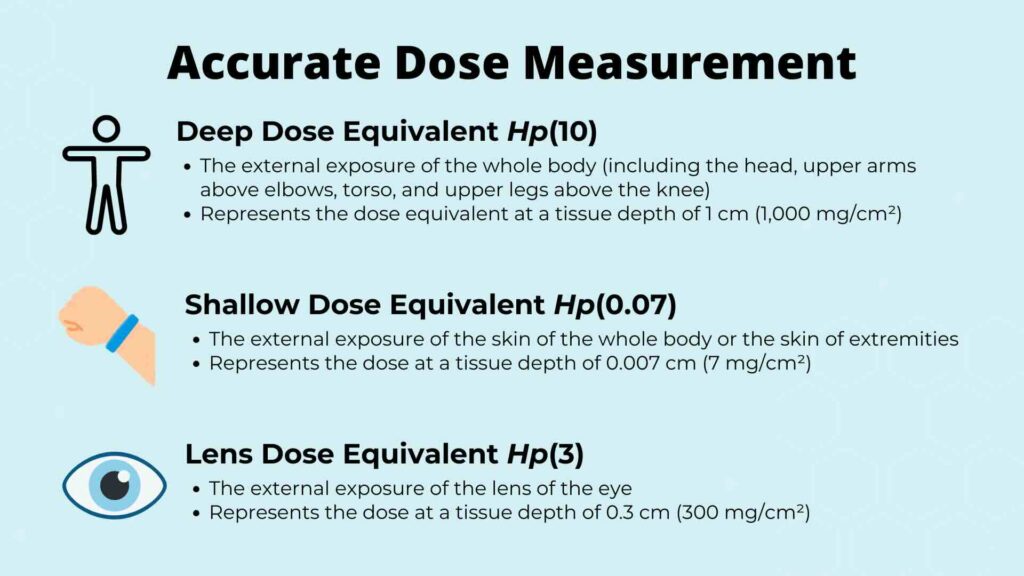
Figure 1. Accurate dose measurement by dose equivalent: deep dose, shallow dose, and lens dose.
In reality, different detector materials “see” radiation differently depending on the type of energy measured, distance, and dosimeter material. That variation affects how accurately we can reconstruct the dose a person actually receives.
The further a dosimeter material strays from tissue equivalence, the more complicated the dosimeter becomes.
Key Takeaways
Tissue equivalence defines accuracy. The closer a detector’s response is to tissue, the more reliable the dose measurement.
Different materials behave differently. OSL and TLD materials vary in their photon energy response, impacting calibration and correction requirements.
BeO (OSL), LiF:Mg,Cu,P (TLD), and LiF:Mg,Ti (TLD) stand out. Among commercial detectors, beryllium oxide (BeO) stays closest to unity across the widest energy range.
Over-response complicates correction. Materials like Al₂O₃:C require filters, algorithms, and multi-element arrays to approximate tissue response.
Simpler materials lead to simpler programs. Choosing tissue-equivalent detectors minimizes uncertainty, correction complexity, and administrative burden.
Understanding Dose Measurement and Tissue Equivalence
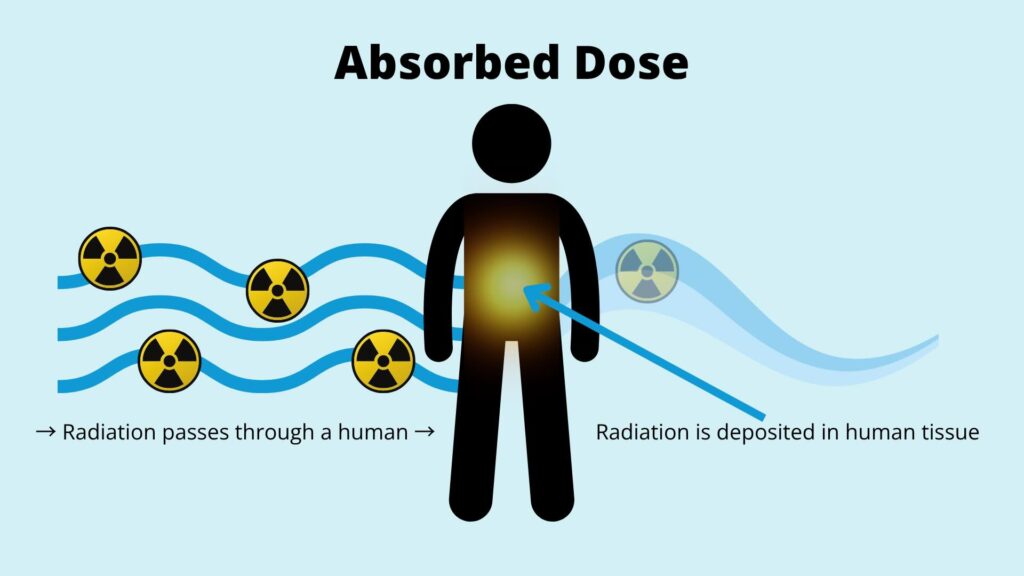
Radiation dose measurement is fundamentally about quantifying energy deposition in tissue. The absorbed dose represents energy per unit mass, but personnel dosimetry focuses on dose equivalent, accounting for radiation type and biological effectiveness.
Figure 2. Absorbed Dose. (Adapted from Radiation Terms and Units; Absorbed Dose; April 8, 2025; United States Environmental Protection Agency, https://www.epa.gov/radiation/radiation-terms-and-units.)
Detectors, however, don’t “feel” radiation like tissue does – they rely on luminescence or heating to measure the dose. That’s why tissue equivalence is so important: it ensures that the detector’s signal is proportional to what human tissue experiences.
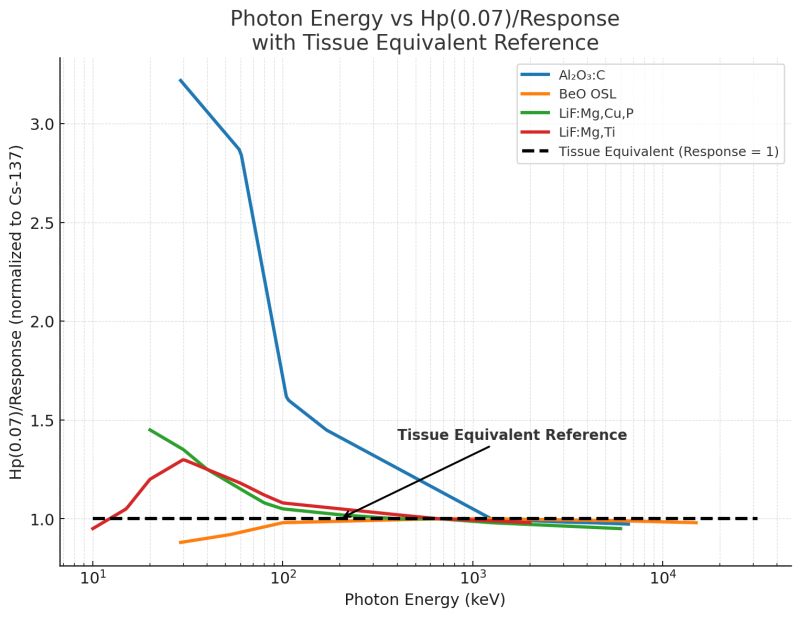
In the plot below, four of the most widely used materials in commercial dosimetry are compared for photon energy response – and only one stays remarkably close to tissue equivalence across diagnostic and therapeutic ranges.
Figure 3. Photon Energy vs. Hp(0.07) Response for common dosimeter materials. (Adapted from Akselrod et al., 1999; Scarboro & Kry, 2013; Yukihara et al., 2008; Jahn et al., 2019.)
A detector material with a response ratio of 1.0 at a given photon energy is considered tissue-equivalent. Deviations from unity indicate either under-response (under-reporting dose) or over-response (over-reporting dose). The shape of this response curve across photon energies tells us how much correction or compensation is needed to achieve accurate results.
Comparing Detector Materials in Dose Measurement
Material
Type
Key Strengths
Limitations
Overall Summary
Al₂O₃:C(Aluminum Oxide: Carbon)
OSL
Extremely sensitive; can be re-read multiple times
Strong over-response at low photon energies (up to 3× tissue); requires complex corrections and filtering
High-performing but complex; best used with controlled energy sources
BeO(Beryllium Oxide)
OSL
Most tissue-equivalent OSL material; high sensitivity; minimal correction needed; stable and reliable over time
Costlier than LiF-based materials
Top performer for accuracy and simplicity; RDC’s chosen OSL material for modern systems
LiF:Mg,Cu,P (MCP)
TLD
Very sensitive; near tissue-equivalent; low fading and high reproducibility
Slight over-response at low energies
Excellent balance of accuracy and practicality; ideal for regulatory and medical monitoring
LiF:Mg,Ti (TLD-100)
TLD
Long-standing industry standard; flat response near unity; proven stability
Lower sensitivity than newer materials
Reliable benchmark material; ideal for calibration and long-term consistency
Al₂O₃:C (OSL – Aluminum Oxide: Carbon)
Al₂O₃:C is one of the most common optically stimulated luminescence (OSL) materials used in commercial dosimetry. It offers excellent sensitivity and re-readability, but comes with a significant drawback: a strong over-response at low photon energies, sometimes up to three times that of tissue (Akselrod et al., 1999; Scarboro & Kry, 2013; Yukihara et al., 2008).
This over-response requires complex filtering, correction algorithms, and angular adjustments to approximate tissue equivalence. While workable, these corrections introduce uncertainty and complexity, particularly in mixed or variable energy environments like medical imaging suites.
BeO (OSL – Beryllium Oxide)
BeO is the standout performer among OSL materials. It provides high sensitivity while maintaining a near-unity response across a broad energy range (Jahn et al., 2019).
Unlike Al₂O₃:C, BeO’s intrinsic properties make it more tissue-equivalent, reducing the need for correction factors or multi-element reconstruction. In real-world applications, this translates to simpler, more reliable dose measurement with fewer opportunities for calibration drift or energy bias.
At Radiation Detection Company, we’ve selected BeO OSL as a cornerstone material in our modern dosimetry systems – not just for its performance, but for its stability and practicality in long-term monitoring.
LiF:Mg,Cu,P (MCP, TLD)
LiF:Mg,Cu,P is a highly sensitive thermoluminescent dosimeter (TLD) material with a slight over-response at low energies that stabilizes near unity as photon energy increases (Pradhan & Bhatt, 1989; Konnai et al., 2000s).
Because of its excellent reproducibility and low fading, LiF:Mg,Cu,P TLDs are ideal for monitoring a wide range of occupational and medical exposures. Their near-tissue response ensures dose accuracy without extensive algorithmic correction, which is why they remain a trusted choice for regulatory compliance and research dosimetry.
At Radiation Detection Company, we offer LiF:Mg,Cu,P TLD as a reliable dosimetry solution.
LiF:Mg,Ti (TLD-100)
Often called the “workhorse” of radiation protection, TLD-100 (LiF:Mg,Ti) has been in use for decades. It exhibits a relatively flat response near unity across most diagnostic and protection energies, making it a dependable standard for historical comparison (Konnai et al., 2000s).
While newer materials may outperform it in sensitivity or reusability, its stable energy response continues to make TLD-100 an essential benchmark for calibrating and validating dose measurement systems.
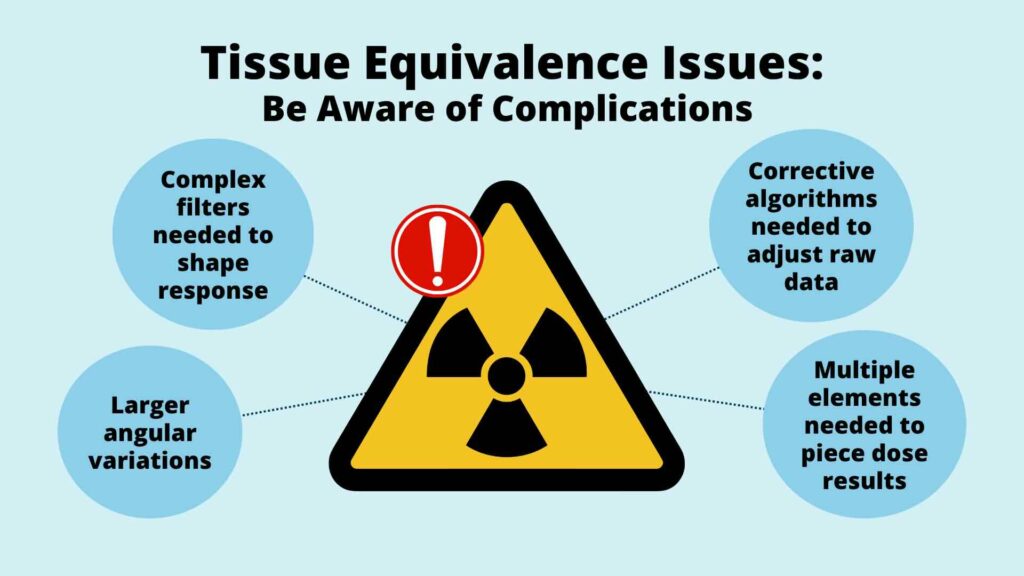
Figure 4. Detectors that stray from tissue equivalence can cause complications.
When a detector strays from tissue equivalence, it creates challenges:
Complex Filtering: To compensate for energy-dependent over-response, manufacturers add metal filters or multi-element arrays to shape the signal.
Algorithmic Corrections: Software must reconstruct dose based on assumed energy spectra – which introduces uncertainty when those spectra vary.
Angular Sensitivity: Detectors with directional bias can misread dose depending on the distance from the radiation source.
Calibration Drift: Each layer of correction adds opportunity for error over time.
A detector that naturally aligns with tissue equivalence, like BeO OSL, avoids many of these pitfalls. It allows the dosimetry system to produce accurate, direct readings with minimal compensation. In practice, that means faster reporting, greater confidence, and fewer administrative headaches for safety officers and RSOs.
Real-World Implications for Radiation Safety Programs
In hospitals, research labs, and manufacturing facilities, dose measurement accuracy directly impacts regulatory compliance and worker safety.
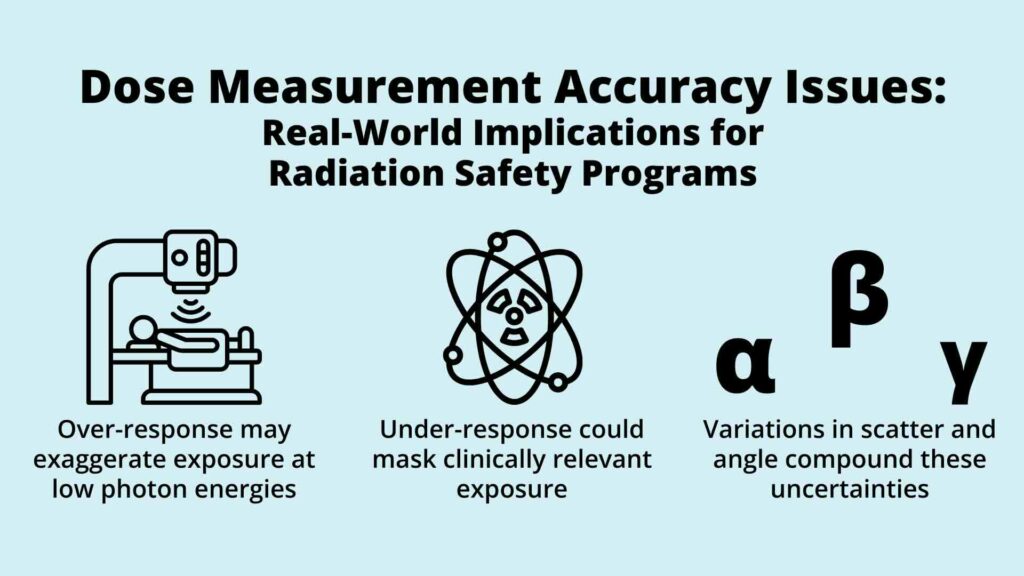
Figure 5. Dose measurement accuracy issues can have real-world implications for radiation safety programs.
When detector response deviates from tissue equivalence, even small energy biases can alter effective dose calculations. For instance:
In diagnostic radiology, an over-responsive material may exaggerate exposure at low photon energies.
In nuclear medicine or therapy environments, under-response could mask clinically relevant exposure.
In industrial or mixed fields, variations in scatter and angle compound these uncertainties.
Choosing a more tissue-equivalent material simplifies program management. It reduces the number of correction variables, makes calibration more stable, and improves trust in the reported dose of record.
That’s why, at Radiation Detection Company (RDC), we’ve chosen BeO OSL and LiF:Mg,Cu,P TLD. They offer high sensitivity, exceptional fade characteristics, and market-leading lower limit of detection performance while staying close to tissue equivalence, keeping dosimetry both accurate and practical.
Tissue Equivalency Comparison by Dosimeter Materials
When it comes to dose measurement, not all detector materials behave the same way. Each one has its own unique interaction with radiation, and that directly affects how accurately it reflects the dose received by tissue.
In personnel dosimetry, tissue equivalence serves as the gold standard. A detector that responds to radiation the same way human tissue does (a response ratio of 1.0) produces a more direct, reliable measure of dose. Detectors that over- or under-respond introduce complexity: they require energy corrections, filters, or software adjustments to reconcile the data with true biological exposure.
To illustrate these differences, the table below compares four of the most common materials used in commercial dosimetry today, highlighting their sensitivity, energy dependence, correction requirements, and tissue equivalence ratios.
Material
Sensitivity
Energy Dependence
Correction Required
Tissue Equivalence Ratio (Response at 1.0 = Tissue)
BeO (OSL)
High
Minimal across diagnostic and therapeutic ranges
Low – typically negligible
≈ 1.0 (Highly tissue-equivalent)
LiF:Mg,Ti (TLD-100)
Moderate
Relatively flat across most photon energies
Low – long-established calibration factors
≈ 1.0–1.1
LiF:Mg,Cu,P (TLD)
High
Slight over-response at low energies; stable near unity above 100 keV
Low to Moderate – generally stable with minimal correction
≈ 1.1–1.2
Al₂O₃:C (OSL)
Very High
Strong over-response at low photon energies (up to 3× tissue)
High – requires multi-element filters and correction algorithms
≈ 2.0–3.0 at low energies
BeO OSL remains the closest to true tissue equivalence, minimizing the need for correction or energy-dependent compensation. Al₂O₃:C, while highly sensitive, introduces significant over-response at diagnostic photon energies, requiring complex filtering. Both LiF-based TLDs perform reliably, with LiF:Mg,Cu,P offering enhanced sensitivity and stability suitable for high-precision applications.
Conclusion: Simplicity Through Tissue Equivalence
Behind every dosimeter is a material with its own personality – some calm, some complicated.
The closer a detector’s response stays to 1.0, the simpler and more reliable the dose measurement becomes. Tissue equivalence isn’t just a theoretical benchmark – it’s what makes dosimetry trustworthy in the real world.
By choosing detectors that behave like tissue, we make dose reporting not only more accurate but more actionable. And that’s the foundation of every strong radiation safety program: one that protects people, ensures compliance, and upholds the integrity of the data we depend on.
Frequently Asked Questions
What does “dose measurement” mean in radiation protection?
Dose measurement quantifies the amount of radiation energy absorbed by tissue. Personnel dosimeters convert detector signals into dose equivalents that estimate biological effect, allowing compliance with regulatory limits and safety optimization.
Why is tissue equivalence important for accurate dose measurement?
Tissue equivalence ensures the detector responds to radiation the same way human tissue does. When a detector deviates from unity response, it either over- or under-reports exposure, requiring additional correction and increasing uncertainty.
What are the main differences between OSL and TLD detectors?
OSL (optically stimulated luminescence) dosimeters use light to release trapped energy, allowing multiple readings, while TLDs (thermoluminescent dosimeters) require heating to release the stored signal.
Which materials offer the best accuracy in dose measurement?
BeO (OSL) and LiF:Mg,Cu,P (TLD) are among the most commercially available tissue-equivalent materials. Both exhibit minimal energy dependence and high reproducibility, making them reliable for clinical, research, and industrial monitoring.
How can organizations ensure dose measurement reliability?
Select tissue-equivalent detectors, maintain consistent calibration protocols, and partner with dosimetry providers who validate performance across photon energies. Simplifying detector correction and calibration workflows enhances accuracy and confidence in dose records.
What factors most commonly affect dose measurement accuracy?
Energy dependence, detector material, angular response, calibration quality, and environmental conditions all play roles. The most controllable variable is detector selection – starting with a material that closely matches tissue response.
Ready to Simplify Your Radiation Safety Program?
Join 41,000+ organizations who trust Radiation Detection Company for accurate, timely, hassle-free radiation monitoring service.









 Previous