
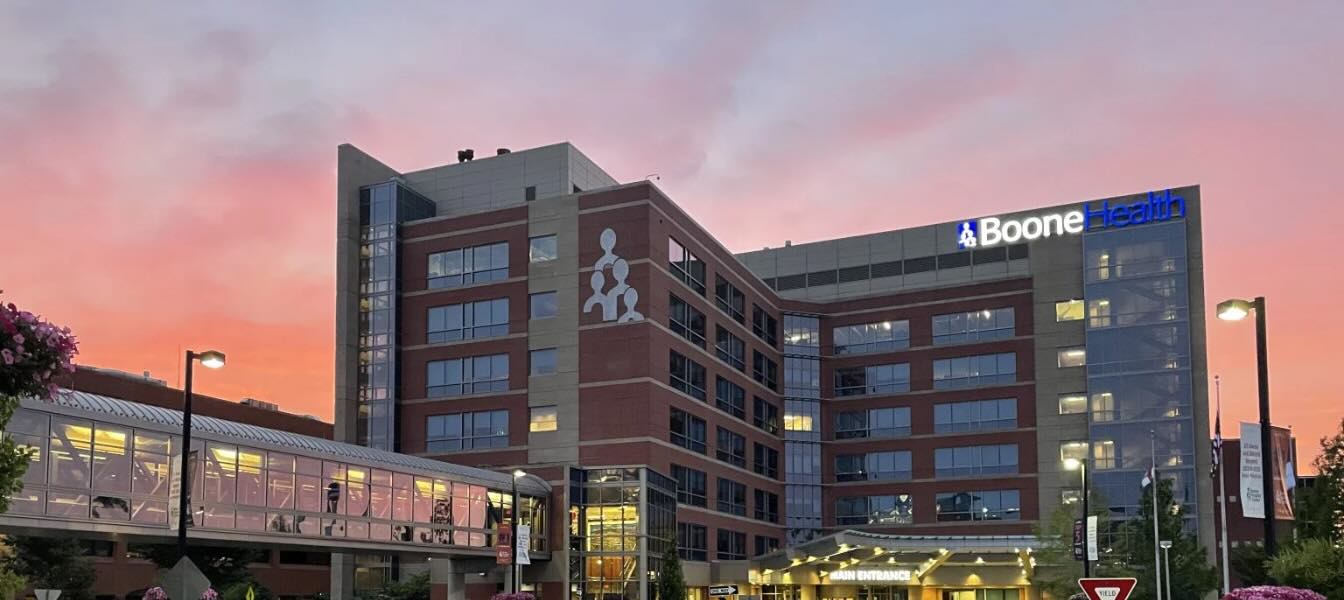
How Boone Health Reduced Dosimetry Costs and Simplified Radiation Safety Management
A Hospital Focused on Healing Communities
Boone Health, a full-service hospital, serves 25 counties in central Missouri with over 1,600 dedicated employees. As a Magnet Hospital recognized for nursing excellence and a state-recognized leader in healthcare, Boone Hospital Center is committed to improving the well-being of its community through outstanding medical care and operational efficiency.
In 2024, Radiation Detection Company (RDC) shared how Boone Health reduced dosimetry costs by approximately $10,000 annually after switching providers. Two years later, we caught up with Radiation Safety Officer Liesje Myers to learn how the partnership has evolved – and whether RDC continued delivering on its promises.
According to Liesje, the answer is yes. What began as a search for transparent pricing has become a long-term partnership built on responsive customer service, proactive account management, and continuous improvements based on customer feedback.

Boone Health
Location
Sector
RDC Customer Since
Number of Employees
Number of Departments
Number of Dosimeters
Problem
Why Did Boone Health Start Looking for a New Dosimetry Provider?
Boone Health began looking for a new dosimetry provider because of late dosimeter shipments and rising costs. Nearly 20% of its previous provider’s bill consisted of fees beyond the badge price, including shipping, department separation, adding new participants, and report charges.
In 2022, Liesje Myers began reevaluating Boone Health’s dosimetry provider after experiencing late dosimeter shipments and steadily rising costs. Some shipments arrived several days late – or even after the first week of the scheduled wear period.
When Liesje examined the hospital’s invoices more closely, she also found numerous charges beyond the base cost of the dosimeters, including department separation fees, shipping fees, new-participant fees, and other added costs.
“It was costing the departments too much money. Once I started digging in, I was shocked at how many fees there were. There were so many things we got nickel and dimed on.”
– Liesje Myers, Radiation Safety Officer, Boone Health
Almost 20% of the previous dosimetry provider’s bill consisted of extra fees beyond the badge price, including department separation fees, shipping fees, new-participant fees, report charges, and other administrative costs. For a hospital committed to optimizing resources without compromising on quality, this financial burden was unsustainable. Boone Health had relied on the same provider for over a decade, but with mounting expenses, it was time to explore better options.
Liesje began searching for a hospital dosimetry provider that could support Boone Health’s size and complexity without layering unexpected charges onto its service. RDC was one of the first providers she found, and the company’s prompt, personalized response immediately distinguished it from the alternatives.
Liesje said Radiation Detection Company’s prompt, personalized response immediately distinguished it from the alternatives. “RDC was the first one to get back with me. The others were more of just a canned response sort of thing, whereas with RDC, I could tell it was a real person emailing me. They were very interested in our program, what we currently had, and helping us get set up.”
Solution
How Long Did the Switch Take?
Boone Health completed its transition to RDC in less than two weeks. The transition included approximately 300 dosimeters, along with billing and invoice setup, Webster calculations, and historical dose records.
From the first conversation, RDC took the time to understand Boone Health’s program and build a solution around its operational and billing needs. That responsive approach, combined with transparent pricing, provided immediate confidence.
RDC eliminated hidden fees and simplified invoicing, but Liesje remained skeptical about the complexity of switching providers. With approximately 300 dosimeters distributed across numerous hospital departments, transferring wearer information, historical doses, billing arrangements, and account details initially seemed overwhelming.
Organizations today have more dosimetry options than ever before. Evaluate your needs and compare dosimetry providers.
RDC guided Boone Health through the transition by collecting the necessary wearer and account information in spreadsheets. Once Boone Health provided the data, RDC configured the hospital’s billing and invoices, applied Webster calculations where requested, and added historical dose records from the previous provider. The setup was completed in less than two weeks.
“They had said, ‘It’s a very simple transition. Just send us that spreadsheet.’ Honestly, once I sent the spreadsheets, everything was ready to go. It was less than two weeks. We had the billing set up, we had the invoices set up how we wanted them, we had the Webster calculations applied where we wanted them, and the historical doses from the other vendor were already on there. It was extremely smooth and much less painful than what I had expected.”
Since Boone Health made the transition, RDC has formalized this onboarding approach into SwitchAssist™, a structured process designed to help organizations change dosimetry providers with minimal disruption. The program supports account setup, wearer-data migration, historical dose transfers, billing configuration, and implementation around the customer’s preferred start date.
“Real Customer Service is probably the biggest change from our prior provider. RDC customer service has been extremely responsive and easy to work with. I thought it might taper off a few months after being a new customer, but nope – it has remained awesome. I feel like I have a relationship with them, and we are important to them.”
In the 2026 follow-up interview, Liesje said RDC had maintained the speed and attentiveness Boone Health experienced during onboarding. “When I first started working with Radiation Detection Company, I was like, ‘Am I their only customer?’ I knew they were working with other people, but every time I need something or send an email, I either get a call or an email right back. Initially, I thought, ‘Am I the only one they’re working with?’ because there’s no way this customer service team is keeping up with all their other organizations the same way they’re keeping up with me. But it’s been the same level of service and response time since I first reached out.”
Considering a dosimetry service transition? Read our guide: How to Switch Dosimetry Providers.
Outcome
What Changed Two Years After Switching?
Two years after switching to RDC, Boone Health continues to save approximately $10,000 annually while benefiting from responsive customer service, faster reporting, and easier dosimetry program management. RDC has also continued to improve its service and products based on Boone Health’s needs and feedback. Transparent pricing eliminated the extra charges that had represented nearly 20% of the hospital’s previous dosimetry costs.
| $10,000 Saved Annually |
20% Cost Reduction Over the Previous Dosimetry Provider |
< 2 Weeks for a Complete Service Transition |
300+ Dosimeters Migrated Across 13 Departments |
Form 5 Ready All Historical Dose Records Transferred at Setup |
|---|
Boone Health also gained faster access to dose reports and greater control over wearer management through MyRadCare™, RDC’s online dosimetry management portal. “You even send me a list of people that you haven’t received a badge from, so all I have to do is forward the supervisor the email. We even get credits if they are returned late. That never used to happen.”
Liesje can create and access reports without submitting a request, retrieve Form 5 records when needed, and add or remove wearers directly through the account.
“It’s been very easy shipping badges. Once I ship a box and you get it, I feel like it takes less than a week for the report to show up, which is much quicker than the prior vendor. Being able to create reports, download them, and print them whenever you want is also helpful. I used to have to contact my old provider and say, ‘I would like a Form 5 on this individual, and yes, I know you’re going to charge me $10, but I need that.’ Now I have access to them basically at any time. It’s also pretty easy to add and delete individuals and manage wearers in the web portal.”
Radiation Detection Company is NVLAP-accredited (Lab Code 100512-0) and uploads dose reports to MyRadCare™ within 10 days of customers shipping their badges back to the Georgetown, Texas, headquarters for processing.
How Does RDC Handle Customer Feedback on Products?
RDC uses customer feedback to identify opportunities for product improvement and refine its solutions. After Boone Health shared feedback about the comfort and fit of its extremity rings, Radiation Detection Company made multiple design improvements based on input from the hospital’s nuclear medicine technologists.
“The first month we got the boxes, our nuclear medicine technologists were like, ‘These are really not very comfortable compared to the other ones.’ I mentioned that, and four or five months later, they had made another design. I brought them to the other nuclear medicine technologists and said, ‘Here, guys, what do you think of these?’ They said, ‘These are better.’ I gave the feedback to RDC again, and it wasn’t that much longer – bam! They sent back the perfect ring. Everybody liked them. That was something that really stood out to me.”
What Is Involved in Moving from TLD to OSL Dosimeters?
Switching from TLD to OSL dosimeters can require minimal change for employees when the transition is properly managed. Boone Health transitioned to RDC’s OSL dosimeters in March 2026 with no noticeable disruption, and only a few employees noticed a difference between the dosimeters.
“We switched from TLD to OSL, and the dosimeters basically look the same. They’re a little bit longer lengthwise than height-wise, and maybe three employees noticed. I was like, ‘Well, they didn’t notice too much of a change.’ I’m waiting to get a little bit of a baseline on how they track doses compared to the TLDs.”
What Does Proactive Account Management Look Like?
At RDC, proactive account management involves reviewing a customer’s dosimetry program for potential issues or unusual activity instead of waiting for the customer to ask for help.
During a routine account review, RDC Customer Success Representative Rachel noticed multiple dosimeters assigned to several interventional radiologists and reached out to confirm that the monitoring approach was intentional. Boone Health had assigned a dosimeter to each physician in each interventional radiology suite to make the badges easier to access and improve wearing compliance as physicians moved between rooms.
“It wasn’t like she was saying, ‘You’re doing this wrong. You should never have two separate badges.’ It was just like, ‘Hey, I was kind of combing through accounts and noticed this, just wondering if this is truly what you had intended to do and if we are shipping the correct number of dosimeters for you.’ When I explained, ‘Yeah, we’re just trying to increase compliance, get them worn consistently, and get the most accurate reading.’ Right now, we’ve got two dosimeters; we just add that dose together, and bam, that’s their dose.”
Why Boone Health Continues to Choose RDC
Nearly two years after first sharing its experience with RDC, Boone Health continues to rely on the company for more than transparent pricing and annual savings. The partnership has provided responsive support, proactive account management, continuous product improvements, and an additional set of eyes watching over one of the hospital’s most important radiation safety programs.
“Definitely the biggest benefit is customer service. The product is good, but the product wasn’t really the issue with the last vendor. It was more the level of customer service, the response time, and basically feeling like RDC cared about what you wanted and needed. They were trying to make things better at the same time I was trying to make things better. It’s also knowing there’s going to be an extra set of eyes watching over our account and helping me out in case something really odd happens.”
Frequently Asked Questions
How much did Boone Health save by switching dosimetry providers?
About $10,000 a year. Nearly 20% of its previous provider’s bill consisted of fees beyond the badge price, including department separation fees, shipping fees, new-participant fees, and report charges. Transparent pricing and a total cost of ownership model eliminated the unnecessary fees.
How long does it take to switch dosimetry providers?
Boone Health completed its transition in under two weeks, covering about 300 dosimeters across 13 departments. Billing, invoicing, Webster calculations, and historical dose records were all configured before the first wear period.
What happens to historical dose records when you change dosimetry providers?
They transfer. RDC loaded Boone Health’s historical dose records from its previous provider during account setup, so the hospital did not lose continuity in its dose history.
Can a hospital switch from TLD to OSL dosimeters without disrupting staff?
Boone Health made the change in March 2026. According to its Radiation Safety Officer, the dosimeters look nearly identical and roughly three employees noticed a difference.
What fees do dosimetry providers charge beyond the badge price?
Boone Health’s previous provider billed department separation fees, shipping fees, new-participant fees, report charges, and other administrative costs, which together came to nearly 20% of the invoice.
Request a Quote
Pleased to offer you a customized quote for our radiation detection devices, tailored to meet your specific safety and your company requirements.

Latest Case Studies
-
How Boone Health Reduced Dosimetry Costs and Simplified Radiation Safety ManagementHospitalsHealthcare

-

-

-


