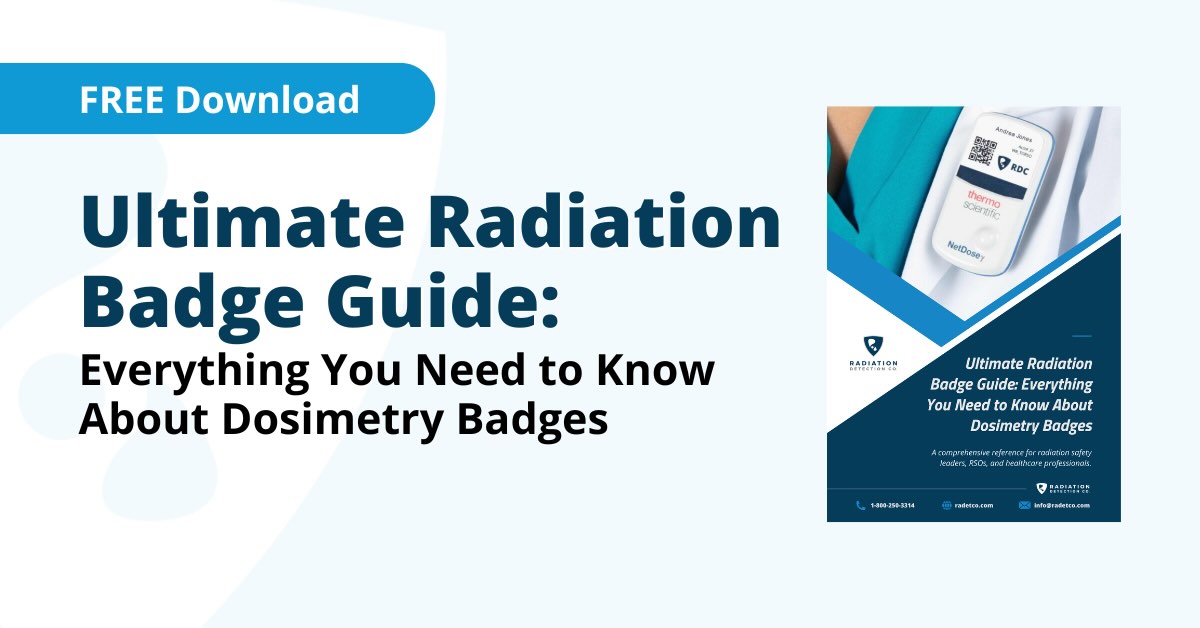
Understand the basics of how a radiation badge functions, why dosimeters are necessary, the differences between each type of dosimeter, and some best practices for radiation safety with this comprehensive guide.
What you’ll learn:
The purpose of radiation badges
How dosimeter badges work
Proper use, care, and essential radiation safety tips
Don’t Miss Out!
Fill in the form to download for free.
22 Pages of Essential Dosimetry Knowledge.
Get Instant Access.
Radiation Detection Company is trusted by leading brands nationwide
Frequently Asked Questions
Need More Information?
Find answers to common questions about radiation dosimeters.
How do radiation dosimeters work?
Dosimeter badges measure radiation exposure by detecting ionization, recording the exposure in a material, and converting it into an electrical signal. From there, a radiation detection company will tabulate the results in a dose report that includes detailed information about exposure levels, ensuring safety in environments where radioactive substances or radiation-emitting equipment is used.
When are dosimeters used?
Dosimeter badges are used to monitor and measure an individual’s exposure to radiation, ensuring that they do not exceed safe levels of exposure and helping to prevent potential health risks associated with overexposure to radiation.
Is there a difference between a radiation detector and a dosimeter?
A radiation detector detects ionizing radiation levels. Dosimeters are a type of radiation detector; they specifically measure and record absorbed dose for an individual working in an environment where radiation is present.
What is radiation dosimetry used for?
Dosimetry measures and monitors the amount of radiation absorbed by individuals or objects to help ensure safety in various fields (such as medicine, industry, research, and nuclear energy) by preventing overexposure and assessing potential health risks.
What is the typical process for returning and replacing dosimeters after a wear period?
If you use traditional passive dosimeters (TLD or OSL), your dosimetry provider should deliver a fresh set of dosimeters to your workplace about two weeks in advance of the end of each wear period to ensure a smooth transition with no gaps in monitoring. At the end of the wear period, you’ll collect your dosimeter badges and issue new badges to all wearers, then ship the old badges back to your dosimetry provider for processing.
The provider will read and analyze your badges, then compile the exposure data into a detailed report. This routine exchange ensures continuous, accurate monitoring of workplace radiation exposure and keeps organizations compliant with safety regulations.
Simplify Radiation Safety with RDC
Radiation Detection Company has been helping businesses get – and stay – compliant with less administrative burden for over 75 years. Get started today and order your badges now.
 Introducing ORA™ OSL Ring: The First US-Made BeO Extremity Ring. Learn more about ORA™ here.